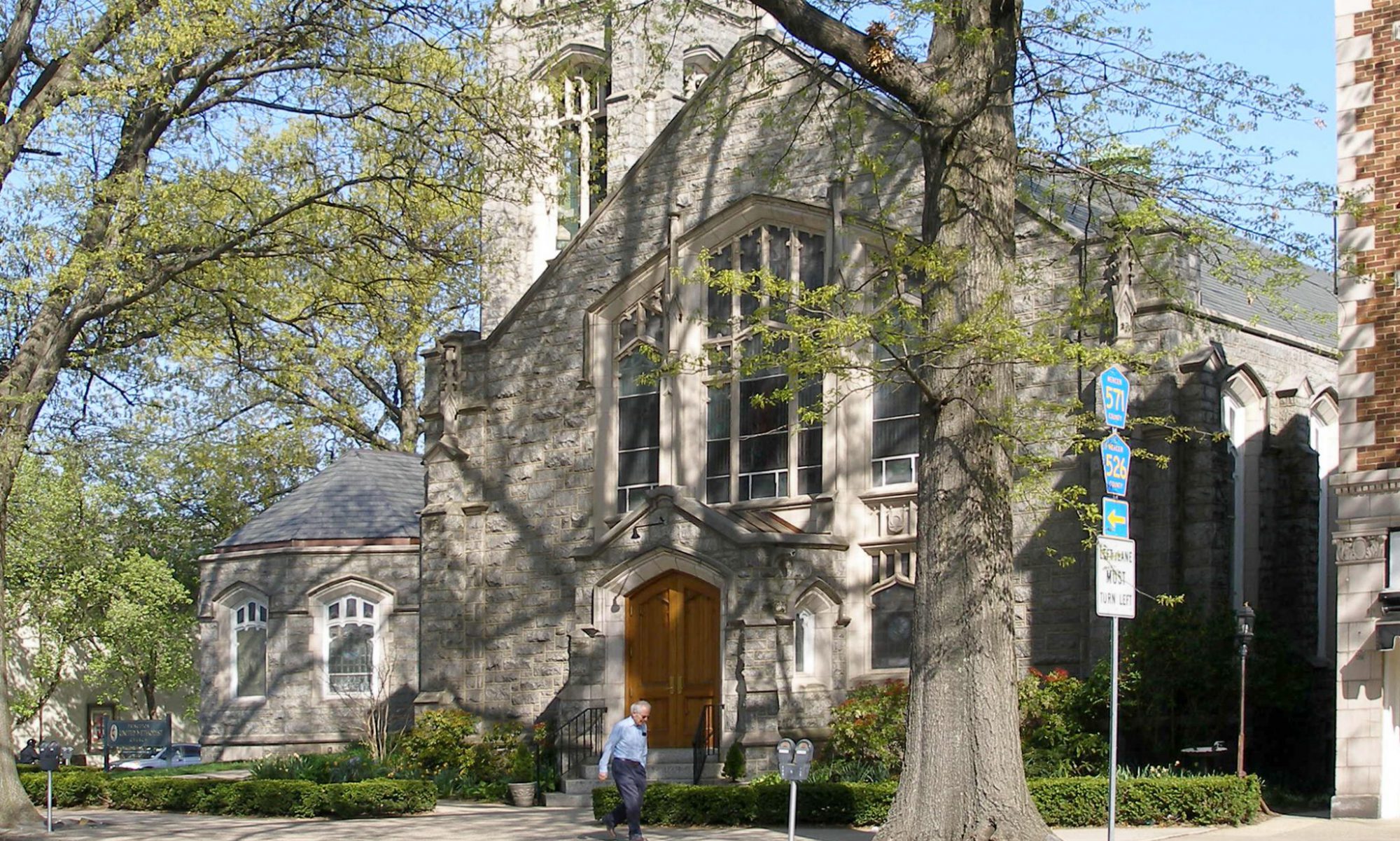

God of the Storm, God of the Calm

Hawaii_wave_EKVOn September 22, Alison Van Buskirk Philip  based her sermon on the story of the disciples waking Jesus up to calm the storm in Mark 4:35-41.  “God’s attention to us is greater than our scattered attention to God,” she said. “Doubt, after the storm, turned to faith. Disappointment, after the crucifixion, turned to hope. The disciples knew something about God and community that they had not know before.”  Here is an excerpt from her sermon: 

As disciples we are invited and called to believe that:

  • No fear can change the reality that we are marked by God and claimed by God as God’s own.
  • No uncertainty can change the reality that God is in control of the sea and wind.
  • No disappointment or criticism or failing or frustration can change the reality of who we are as God’s children.

And because of that reality, because God has claimed us as children, we are free. We are free to risk. We are free to listen, to really listen, to our neighbors. We are free to start fresh over and over again. We are free to be who we are and to give ourselves to the community where God has placed us. Because God claims us and holds us and loves us, we are free to love more fully and to grow in our love.

I think that is the point, really. The point is not always about getting rid of fear, getting rid of uncertainty, getting rid of disappointment. No, the point is about becoming people with an ever-increasing capacity to love God and an ever-increasing capacity to love our neighbors. The God we worship here together is a God who can use any storm, any disappointment, any cross to increase us in love. Of course, God needs our cooperation, which can be hard, and that’s also why we need each other. We come here together as a community to help each other grow toward that love of God and neighbor –through our worship, through our fellowship, through our service.

And so whatever disappointment may befall us, the cross, which forms our community and holds our community together, that cross is a hinge that tells us there is more to the story. The cross is a hinge that opens our disappointments, uncertainties, and fears into something new in ways that increase us in our love. Through the storms Christ still comes to us and says, “Peace, be still.” Through the cross Christ comes and says, “I am with you.” Through all things, Christ comes and says, “Love one another as I have loved you.” Let us give all of our thanks and our praise to this God who is God of the storm and God of the calm!

Photo by Elizabeh Van Buskirk
Bill Fairbanks: Doing the Hard Thing

bill fairfieldRev. Jana Purkis-Brash challenged the congregation, on Sunday, in her sermon “Fitting In or Becoming Fit.” Taking the spiritual gifts passage from I Corinthians 12, she helped us remember times when we had play the part we didn’t want to play, when we wanted to “fit in.”
“Pressure squashes our particular gifts,” she warned.”To fit in, we hide away what God has given us to be gifts to others. Do the hard things,” she urged. Don’t “put a basket over your light.” Don’t resist the very things that make us uniquely situated to help others and work for good. “We have choices,” said Jana, “to simply fit in or become fit. May God bless us as we choose to do the hard thing.”

She cited how Nancy Brinker pushed uphill to make sense of her sister’s death by cancer. You may not know Nancy, but you will recognize the name of her sister, Susan G. Komen, and the millions of dollars raised in her name to combat breast cancer.

Jana offered an excerpt from Do Hard Things” A Teenage Rebellion Against Low Expectations, by Alex and Brett Harris, two young men who challenge young Christians:

  • Do things outside your comfort zone
  • Do things that go beyond what is required
  • Do things too big to accomplish alone — organize a team
  • Do things that don’t earn an immediate payoff, but that are the right thing to d
  • Do things that don’t fit in

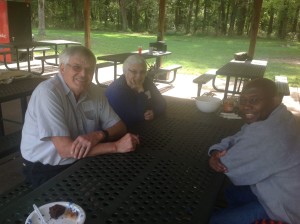
As if to illustrate, some of us met a couple who are living those rules, going outside their comfort zone, doing something that doesn’t fit in. They joined us at the All Church Picnic. Bill Fairbanks-– a cultural anthropologist from California — is walking across the United States, just “to do it.” He’s gotten as far as Princeton, en route to Boston. His wife, Carol, drops him off in the morning and picks him up at night. They show us that anyone of any age can take up a challenge.

May God bless us as we choose to do the hard thing.

Pictured above, Reggie C speaking with the Fairbanks at the church picnic.


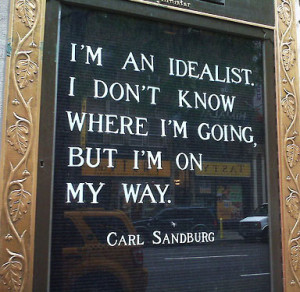
I’m an idealist and I must always be

idealistI’m an idealist.  I’m afraid I must be.  For, smack dab in the middle of idealism, there is hope, firmly rooted.
If I say I am committed to pursuing a life centered in love, and since love hopes in all things, then I must continue in the hope that the truest essence of Humanity is found in loving one’s neighbor as one loves one’s self.

We don’t see many examples of this notion in the media on a daily basis. We see images of violence, we hear stories of greed and depravity, and we watch “reality shows” that denigrate and leave little room for hope in our future.

As an artist, part of what I believe I am charged to do in “holding a mirror up to nature” is to show things as they are. But I cannot leave it there. I believe the arts must also, in addition to showing things as they are, give our imaginations a chance to dream about and hope in what could be.

I want to share this video with you. It is a beautiful story that gives me hope in the possibility of what could be and what already is. After I watched it for the first time, I wondered how this story might play out in my own life. What “reality show” could I star in where this type of plot would unfold in its own way?

So, I give you some remarkable story telling. Enjoy!


[youtube=http://www.youtube.com/watch?v=7s22HX18wDY&w=560&h=315]

Christians Need No Alter Ego

batman dc comicsFor PUMC’s Labor Day family service, with more than the usual number of children in the congregation, Cathie Capp opened her September 1 sermon with the “scandal” over the casting of Ben Affleck as the superhero Batman. She brought new meaning to the day’s parable, the Prodigal Son, in Luke 15:11-32.” (Catherine Williams had animatedly told that story for the children’s sermon.)

For more than 70 years, Batman has been the alter ego of playboy/philanthropist Bruce Wayne. “His identity changes with what he is doing at any given time.”

Our personal identities — how we think of ourselves — also change according to what we are doing and where we find ourselves in life. Cathie pointed out that, as adolescents from age 12 to 19, we struggle to establish our identities. Later, we label ourselves according to our position in the family (wife, mother, daughter) or our jobs (where we work or if we are not working outside the home). “Labels blur the line between who we are, and what we do begins to define how we perceive ourselves.”

In this parable, both young men have an identity crisis. The younger son tries unsuccessfully to establish his identity as a playboy and ends up with a job feeding pigs — surely an identity problem for a Jew who is observant re dietary laws. He thought his identity had been erased, that he was no longer belonged to his father’s family, and he wanted merely to work for his father.

The elder son had his own identity crisis.

“The father is the only person who does not base his identity on the circumstances of his life as a father or a wealthy landowner —  or on what he did or what his sons did. The father grounds his identity on what he truly IS.”

How do we become secure? How do we identify who we are, so that we don’t need an altar ego or a costume change? By understanding that we are all uniquely equipped without aliases, for a divine purpose — because we are unconditionally loved. We can choose to ignore it, but nothing we can do will change our identity as beloved children of God. This unconditional love is given recklessly, and we are 100 percent secure. She quoted Romans 8:38-39, that neither death nor life nor …anything in all creation can separate us from the love of God that is in Christ Jesus our Lord.

“We cannot earn it, but we become worthy by WHOSE we are, by looking only one place for validation,” she said, by grounding our identity in such activities as prayer, scripture study, worship, participating in small groups — and Holy Communion.

And with that, Cathie Capp invited us to the Communion table.

Image from DC comics.