How Presbyterians Almost Kept Methodists from Buying Land
This is the second in a series of excerpts from “A Journey of Faith for 150 years: A history of the Princeton United Methodist Church” by Ruth L. Woodward, Copyright 1997.
….The first task facing the new minister, Rev. Ashworth, was to secure a plot of land on which to build his church.
As the home of the College of New Jersey (which became Princeton University in 1896) and the Princeton Theological Seminary, Princeton was dominated by Presbyterians. The entire faculty of the Seminary were Presbyterian clergymen, and the College had only a few non-ministerial members on its faculty. Tales of enthusiastic singing and noisy conversions at camp meetings gave the Methodists a reputation among the more sedate Presbyterians of being loud and lacking in dignity, perhaps verging on rowdyism. It was thought that these Methodists would certainly be a bad influence on the college and seminary students, and a subtle form of discrimination was exerted, making it difficult to secure a suitable plot of land on which to build.
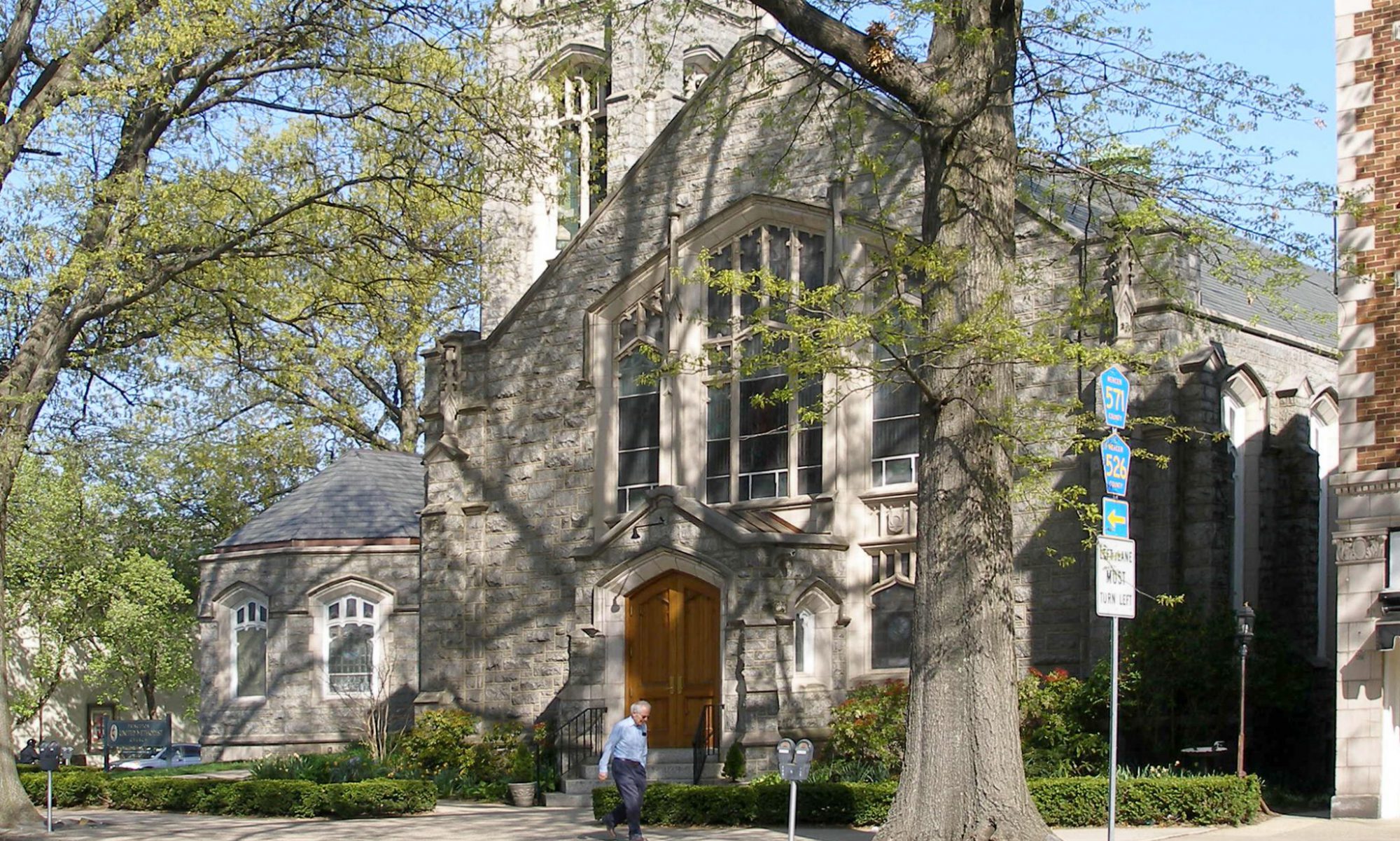
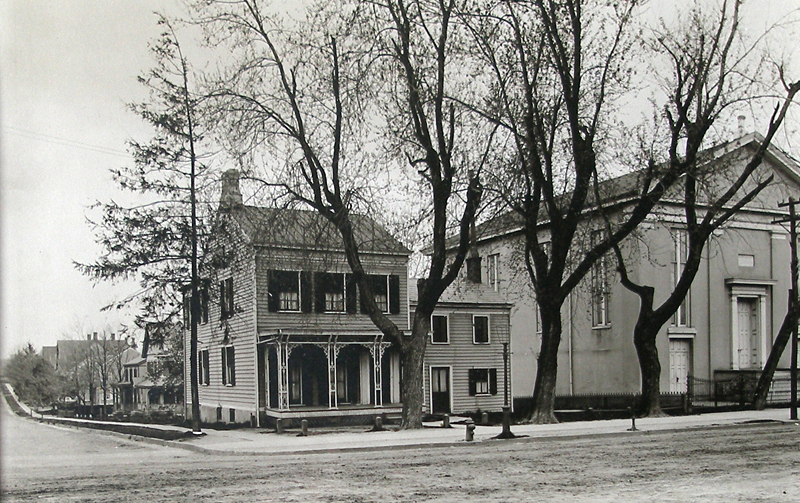
The building that was both the home and medical office of Dr. Oliver Bartine occupied the land on what would later become the corner of Nassau Street and Vandeventer Avenue, although the latter street had not yet been cut through. The area of the present church building containing the Sanford Davis Room and the chapel occupies Dr. Bartine’s former lot. This property, as well as the adjoining lot which the new congregation wished to purchase, had once been part of the estate of Dr. Ebenezer Stockton, who had his home and office at Bainbridge House, the present home of the Historical Society of Princeton. All of this land had been part of the kitchen garden so necessary to homes at that time.
Stockton was the brother-in-law of the Reverend Ashbel Green, a staunch pillar of conservative Presbyterianism. During his tenure as president of the College of New Jersey, from 1812 to 1822, Green had strongly opposed any other religious groups coming into Princeton and possibly seducing his students from the straight and narrow road of Calvinism. The lot where the Methodists wished to build their church was owned by Alexander R. Boteler and his wife, Helen, descendants of Dr. Stockton, who were residing in Jefferson County, Virginia. Feeling that they might refuse to sell the land for the use of a Methodist church, they were not approached by representatives of the congregation.
Instead, Dr. Bartine purchased the property for $500 by a deed dated September 20, 1846, with the sellers probably assuming that he wished to enlarge his office. On November 30, 1848, he conveyed the property for the same price to the newly appointed Trustees of the Princeton Methodist Episcopal Church, a group which he served as president.
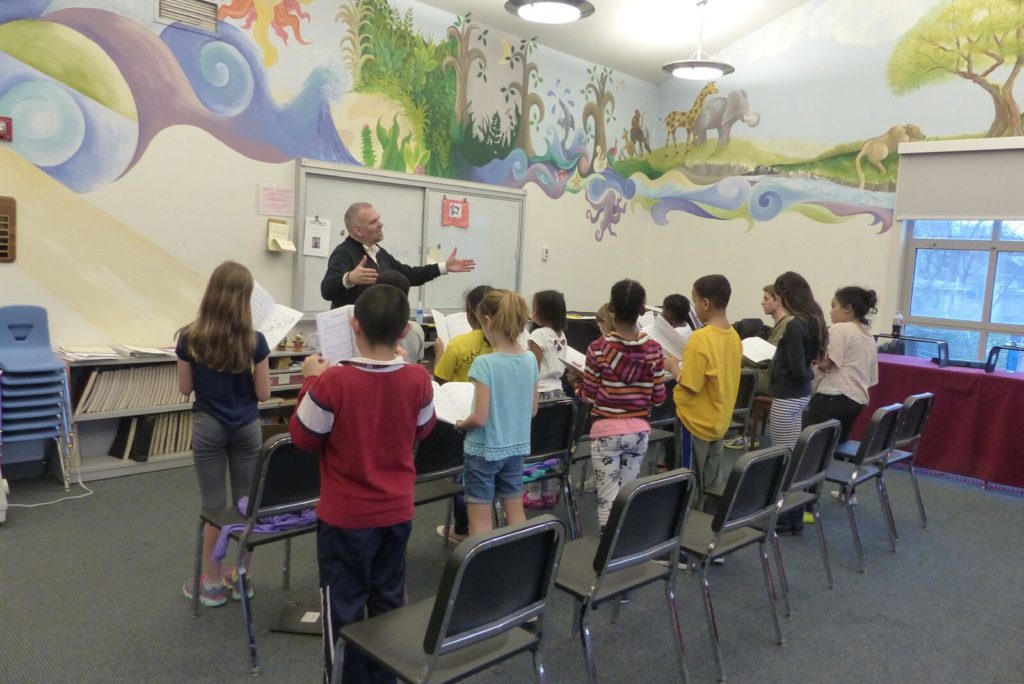
The beauty of Christian music comes alive when children and youth feel what the lyrics say, according to Tom Shelton, PUMC’s director of children’s and youth choirs. Choir members learn good singing techniques and music theory (video link here); they participate in worship monthly, present a musical in the spring, and sing at special services throughout the year (video link here). “I want young singers to love music their whole life, not just for the time they are with me,” says Tom.
Encourage families you know to bring their children to PUMC’s choir. What they learn is invaluable. They enter wide-eyed and curious and leave as musical and global citizens. Invite newcomers to the first rehearsal on Wednesday, September 12, at 4:30 p.m. (kindergarten and first grade) and on Wednesday, September 12, at 5:30 p.m. (second through fifth grade). The first rehearsal for youth (grades 6-12) is Sunday, September 9, 5 p.m. Tomteaches the youngest children, ages three and four, during their Sunday School class.
Pastor Jenny Smith Walz preached on July 29, 2018 in the sermon series “Hungering for God” on the topic “To Life.” Her text was John 15: 1-17.
For excerpts from her message, click here. You can hear it on Facebook and the audio will be posted on the website.
Pastor Jenny began by suggesting —
What you are hungry for, longing for, is a clue to our hunger for God. Our Creator brings us to fulfillment of life.
What is alive in you today? To come more to life today?
One theme I hear as a pastor — loneliness. Half of Americans feel disconnected. They have fewer than daily or weekly conversations about something meaningful. This can shorten lives, but being connected to one another can lengthen our lives.
You were likely conceived in love and surely connected to God’s love and biologically connected to your mother. Yet we all have felt brokenness of disconnection, fears of being separate from one another. We protect ourselves. We work hard to stave off those feelings – sometimes, by being really busy. The illusion of being connected.
Or by being very active on social media (which of course can also be good and heavy users are no more lonely than home who don’t use it!)
By numbing ourselves – drinking or eating.
By preparing for all the ways we might be disappointed and never stepping into any connections.
Life and love and connections are the very things that bring us to life.
What is alive in you today?
Are you wired? Jesus used that kind of example but his metaphor was the vine.
Picture a vine. Jesus is the stem. God the father is the grower, tending the vine, we are rooted into this vine, this flow of love and life-giving love that moves through and around us.
The ways we disconnect ourselves: we are raised to be independent, more a me than a we. We are raised to believe that we shouldn’t need each other so much. It is scary to think we need to be rooted together. It is real to fear you will be disappointed or that YOU will disappoint someone else. ‘I must be odd, alone in this.’
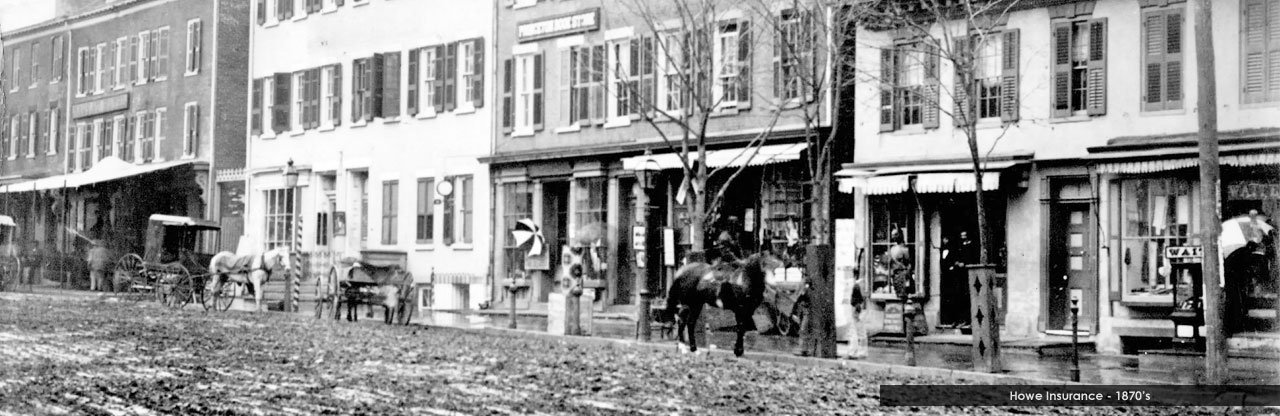
Nassau Street in the 1870s: Courtesy Howe Insurance
This is the first in a series of excerpts from “A Journey of Faith for 150 years: A history of the Princeton United Methodist Church” by Ruth L. Woodward, Copyright 1997.
This excerpt features Rev. David Bartine, the ‘spiritual godfather” of the Princeton Methodist Church (and the father of Dr. Oliver Bartine, who would procure the land for the first sanctuary),
The earliest of the hard working, circuit riding, Methodist preachers in New Jersey covered the entire state as their circuit. They found New Jersey slow to welcome Methodism. The Society of Friends was dominant in the southern part of the state and’ northern New Jersey was largely Presbyterian, with strong pockets of Dutch Reformed communities. The central part of the state contained all three groups, and none particularly welcomed any competition.
As more Methodist ministers became available the state was divided into the East Jersey and West Jersey Circuits, roughly corresponding to our Northern and Southern New Jersey Annual Conferences today. As smaller divisions were formed the Trenton Circuit was established in 1786. It seems likely that some of the circuit riders held services in Princeton, and there are suggestions that an itinerant lay preacher visited here as early as 1791.
In 1802 the Reverend Ezekiel Cooper was the first ordained Methodist minister on record as having preached in Princeton. However, we should probably consider that the real beginnings of Methodism in Princeton coincide with the appointment of the Reverend David Bartine to the Trenton Circuit, and Bartine should certainly be honored as the spiritual godfather of the Princeton Methodist Church.
Born in Westchester County, New York, in 1767, Bartine first served as an assistant to Bishop Francis Asbury, which meant preaching at no specified salary in places where there were no churches. He later received his first appointment from Bishop Asbury, who admired his wonderful oratorical power.
Bartine spent forty-one years in the Methodist ministry, many of those years on circuits that required constant travel. During this time he held twenty-nine one-year appointments and six two-year appointments. His first assigment was to “preach, form circuits and prepare the ground for permanent congregations” in “all that part of the State of New York west of Albany and as far north as Canada.”
After this grueling assignment he was moved to New Jersey where, except for a few years across the river in Pennsylvania, he spent the remainder of his ministry. He must have had a rigorous constitution, since even when assigned to an already established Methodist church he was still expected to ride a circuit to the surrounding towns and countryside.
Bishop Asbury praised Bartine for his “splendid argumentative power in compelling the enemies of Methodism to respect her.” Bartine apparently enjoyed engaging in logical debates, in what was described as “a cold steel-like manner,” without showing anger, but cooly presenting clear and logical arguments. One of his favorite gambits was to go into a store with his Bible in hand, and force a controversy on some text with the local men gathered there. Then he would calmly assert what he believed was right. He had a prodigious memory and could probably easily outquote any of his opponents.
As minister of the Trenton Circuit, Bartine first preached in Princeton in 1810 at the home of a Captain Blue, returning at intervals after that. However, it was not until 1841 or 1842 that a Methodist class was established by the Reverend C. H. Whitecar, meeting in the home of Samuel Stephens on Canal Street, now Alexander Street, with Mr. Stephens acting as the class leader.
Bartine’s second wife was Elizabeth Hunt of Cedar Grove, a small settlement several miles from the center of Princeton. Located on the Cedar Grove Road, now the Great Road, it contained a cluster of houses and farms, a one room school and a small general store. Mrs. Bartine remained in Cedar Grove, caring for the children of Bartine’s first marriage, along with their son Oliver, freeing her husband to travel more extensive and arduous circuits. Bartine finally retired to Cedar Grove in 1835.
In 1845 the Reverend T. T. Campfield held a series of revival meetings at Cedar Grove. The conversions that resulted from these meetings created enough enthusiasm to support the building of a small chapel the following year. Located about 100 yards southwest of the Great Road, it is described as a weatherboarded building painted white. David Bartine must certainly have been an enthusiastic supporter of this project, and the following year his son, Dr. Oliver Bartine, became a leading member of the group responsible for establishing a church in Princeton.
The elder Bartine’s influence probably was also felt under the leadership of the Reverend Israel Corbit, the second minister to serve Princeton, who had formerly served under Bartine in Camden, New Jersey. George Batchelder, eighth minister of the Princeton church, was not only converted under Bartine, but later became his son-in-law.
The revival meetings at Cedar Grove gave impetus to the group of Methodists already holding class meetings in Princeton to organize their own church. The New Jersey Conference had for some time been eager to establish a Methodist society to serve not only Princeton, but the surrounding area. However, the opposition of many of the townspeople had made it impossible to find a suitable location for a church at a resaonable price. Now, at the request of the local group, the Conference established a Princeton Circuit, and in April 1847 the Reverend Joseph Ashbrook was the first minister appointed to the new church, with the small congregation still meeting in members’ homes. The first task facing the new minister was to secure a plot of land on which to build his church.
 The beauty of Christian music comes alive when children and youth feel what the lyrics say, according to
 Pastor Jenny Smith Walz preached on July 29, 2018 in the sermon series “Hungering for God” on the topic “To Life.” Her text was